Food insecurity in Ottawa is not a marginal issue. In 2026, over 1 in 8 households in Ontario reports regularly skipping meals or reducing portion sizes due to lack of money. In the National Capital Region, that number translates to tens of thousands of people each month who cannot reliably access enough food. This article breaks down who is affected, why the problem persists, and what local programs are doing about it.
What Food Insecurity Actually Means
Food insecurity is not just hunger. It is a condition in which a person or household lacks consistent, adequate access to nutritious food because of financial constraints. Researchers typically define three levels:
| Level | What It Looks Like |
|---|---|
| Marginal | Worry about running out of food; limited variety |
| Moderate | Reduced quality and quantity of food eaten |
| Severe | Entire meals skipped; days without eating |
All three levels have measurable health consequences. Chronic moderate food insecurity is linked to higher rates of type 2 diabetes, depression, and hypertension — conditions that cost the healthcare system more than the food itself would have.
Who Experiences Food Insecurity in Ottawa
Food insecurity does not affect all groups equally. The following populations in Ottawa face disproportionately high rates:
- Single-parent households, particularly those led by women
- Renters spending more than 40% of income on housing
- Recent immigrants and refugees without stable employment
- Indigenous peoples in urban Ottawa
- Adults with disabilities on fixed provincial support income
- Post-secondary students, especially those without family support networks
- Seniors on fixed pensions with rising grocery costs
A key driver in 2026 is the gap between food costs and income support levels. Ontario Disability Support Program (ODSP) provides up to $1,228/month for a single person. Average monthly rent for a bachelor unit in Ottawa runs approximately $1,450–$1,600. That leaves no room for food before a single dollar of grocery spending.
Why Food Insecurity Is Getting Harder to Solve
Several structural factors have made the issue more persistent:
Housing costs absorb income first. When rent consumes 60–80% of monthly income, food is the only flexible budget line.
Grocery prices remain elevated. Canada's food price index rose sharply between 2022 and 2024 and has not returned to pre-inflation levels. Staples like eggs, bread, and produce cost 25–35% more than in 2021.
Food bank demand is outpacing supply. The Ottawa Food Bank reported record monthly visits in 2024 and 2025. Agencies in the network collectively distributed over 7 million pounds of food annually — yet still turned away requests due to inventory limits.
Social assistance rates have not kept pace. Ontario Works and ODSP rates have seen incremental increases, but not enough to offset compounded inflation in housing and food simultaneously.
Precarious employment. Gig work, part-time retail, and seasonal labour mean income fluctuates month to month. Workers may earn above the low-income threshold one month and fall below it the next, disqualifying them from some supports.
How Ottawa's Community Responds
Ottawa has a layered network of food programs. These range from large regional food banks to hyperlocal community meal programs. Here is how the different models work:
Food Banks and Pantries
Food banks collect, sort, and distribute donated and purchased food through a network of member agencies. Individuals register with a local agency based on postal code and can typically access food hampers once or twice per month. Eligibility is based on household size and income.
Limitations: hampers are often high in shelf-stable carbohydrates and low in fresh produce, protein, and culturally specific foods. Access depends on transportation and operating hours.
Community Meal Programs
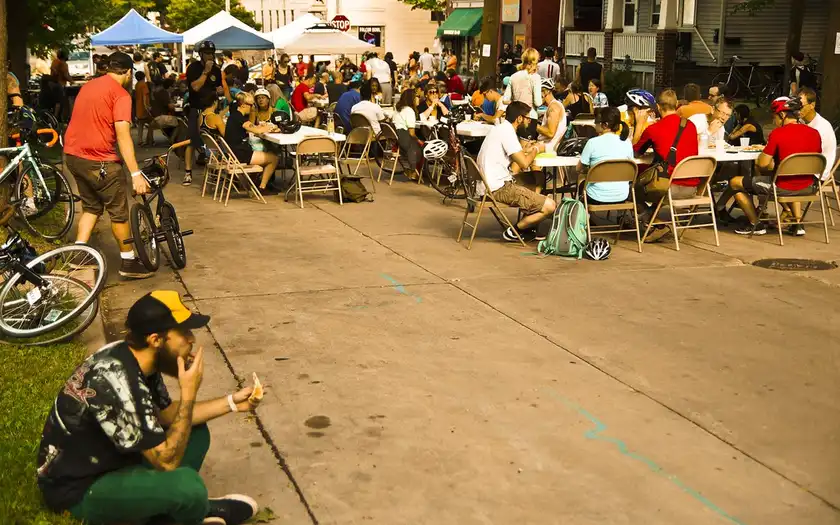
Community meals differ from food banks in a critical way: they are social. Guests sit down together, eat a hot meal, and interact with volunteers and other community members. This model addresses isolation alongside hunger.
Programs like Supper Table operate in this space — organizing regular community dinners where anyone can come and eat, regardless of income or background. The format removes stigma. There is no registration, no income verification at the door, no distinction between guest and volunteer in terms of how people are treated.
School and Youth Programs
Ottawa's public and Catholic school boards both operate breakfast and snack programs. Many schools in lower-income catchment areas provide food daily. The Stop Hunger Now model has also been adapted by several Ottawa churches and community centres for after-school programming.
Mobile Outreach
Several organizations bring food directly to encampments, shelters, and community housing buildings. This reaches people who cannot travel to fixed locations — whether due to disability, precarious housing status, or lack of transit access.
The Role of Volunteers
Volunteers are not supplementary to food programs in Ottawa — they are load-bearing. Consider the operational reality:
| Function | Volunteer Contribution |
|---|---|
| Food sorting and packing | 70–80% of labour in most food banks |
| Community meal preparation | Often 100% volunteer-run in smaller programs |
| Delivery and mobile outreach | Volunteer drivers essential where paid delivery is unavailable |
| Administrative support | Grant writing, social media, donor coordination |
A typical community meal program in Ottawa relies on 8–15 volunteers per event. For a weekly program, that is 400–800 volunteer hours per year just to run the meals — before counting food procurement, communications, and coordination.
Volunteering at a community food program also produces community capital. Volunteers report stronger neighbourhood connections, reduced personal isolation, and increased awareness of local need. Programs that invest in volunteer experience retain people long-term, which reduces training overhead.
What Donations Actually Fund
Many people assume food banks only need canned goods. In practice, monetary donations are more flexible and often more impactful than in-kind food:
- $25 can provide a family with fresh produce for a week through bulk purchasing networks
- $100 can fund supplies for a community dinner serving 40–60 people
- $500 can cover refrigerated transport for a month of mobile outreach
In-kind donations are still valuable — particularly culturally specific foods (halal proteins, rice, lentils, plantains) that are harder to source through standard food bank supply chains. These items allow programs to serve Ottawa's diverse immigrant and refugee communities more effectively.
Planned giving and corporate matching programs are under-used in the Ottawa charitable food sector. Organizations with registered charity status can issue tax receipts, and donors can carry forward charitable credits in Canada for up to five years.
Gaps That Community Programs Cannot Fill Alone
Community food programs are emergency infrastructure, not a systemic fix. The evidence is consistent: food insecurity is primarily an income problem, not a food distribution problem. Structural solutions include:
- Increased social assistance rates indexed to actual cost of living in Ontario cities
- Affordable housing expansion to reduce the share of income consumed by rent
- Pharmacare and dental coverage so low-income households do not sacrifice food to cover medical costs
- Paid sick leave universally applied so workers do not lose income when ill
Community organizations in Ottawa consistently advocate for these changes while simultaneously running programs that address immediate need. Both functions are necessary.
How to Get Involved in Ottawa
If you want to contribute to reducing food insecurity in Ottawa, the options are concrete:
Volunteer:
- Sign up for a shift at a community meal program
- Drive for a mobile food delivery route
- Help sort or pack at a local food distribution agency
Donate:
- Give money rather than only food when possible — it stretches further
- Look for organizations with registered charity status for tax receipts
- Set up a monthly recurring gift rather than one-time, which helps programs plan
Advocate:
- Contact your Ottawa city councillor or MPP about social assistance adequacy
- Support campaigns for living wage legislation in Ontario
- Share data-based information about food insecurity in local conversations
Refer:
- If you know someone who is food insecure, connect them with programs before they reach crisis level
- 211 Ontario is a free, 24/7 referral service covering food programs by postal code