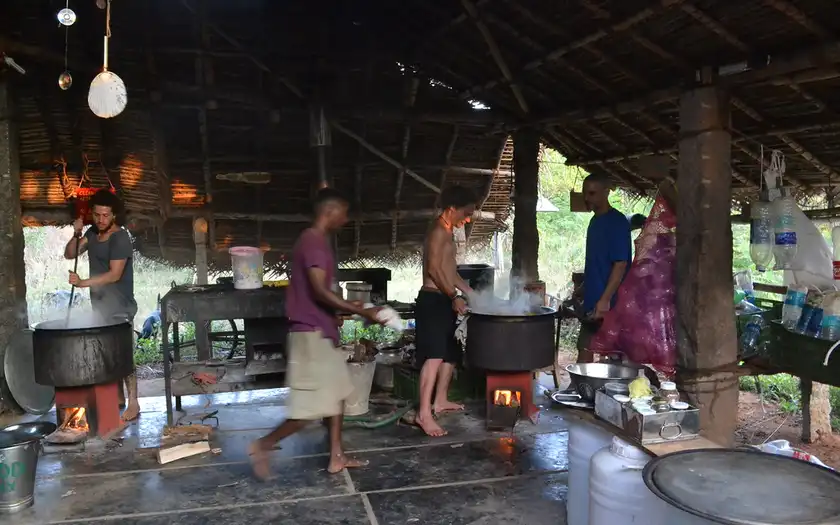
Supper Table runs regular community events across Ottawa where neighbours share meals, volunteers show up, and donated food reaches people who need it the same week it arrives. These are not fundraising galas or awareness campaigns — they are working gatherings with tables, food, and real people. If you want to do something useful about hunger in your city, this is where to start.
What Happens at a Supper Table Event
Every event centres on a shared meal prepared from donated and locally sourced ingredients. Guests sit together — no intake forms, no income verification, no referrals required. A typical evening runs two to three hours and serves between 40 and 120 people depending on the venue and the volunteer crew available that night.
Behind the meal there are several moving parts:
- Food sorting and prep (starts 90 minutes before doors open)
- Front-of-house hosting and seating
- Kitchen support and plating
- Post-meal cleanup and food storage
- Outreach coordination for guests who need follow-up support
Each event also functions as a soft intake point. Volunteers trained in community navigation can connect guests with housing supports, mental health referrals, and other Ottawa-area services without interrupting the meal itself.
Types of Events on the Calendar
Supper Table runs more than one format. Knowing the difference helps you decide where your time or donation fits best.
| Event Type | Frequency | Typical Capacity | Open To |
|---|---|---|---|
| Community Dinner | Weekly | 60–120 guests | Anyone, no registration |
| Pop-Up Meal | Monthly, rotating locations | 40–80 guests | Anyone, no registration |
| Volunteer Orientation | Bi-weekly | 10–20 new volunteers | Adults 16+ |
| Food Drive Collection Day | Seasonal | N/A | Donors dropping items |
| Community Kitchen Workshop | Monthly | 12–16 participants | Guests and community members |
The Community Kitchen Workshop is worth highlighting separately. Participants cook together, learn batch cooking techniques for low budgets, and leave with a meal and a printed recipe set. It runs on Saturday mornings and has a waitlist most months.
Where Events Take Place in Ottawa
Events rotate across several Ottawa neighbourhoods to reduce travel barriers for guests. Confirmed regular venues include community centres in Vanier, Overbrook, Hintonburg, and the ByWard Market area. Pop-up dinners have also run in Gloucester and Nepean when partner venues are available.
Location rotation is intentional. Concentrated food services tend to create geographic dependency — people travel long distances to reach a single site, which adds cost and exhaustion to an already difficult situation. Distributing events across the city means more people can walk or take one bus.
If you are trying to reach a specific neighbourhood and are not sure whether an event runs nearby, the best approach is to check the current schedule directly or contact the outreach team.
How to Volunteer at an Upcoming Event
Ottawa has dozens of food-related charities — Ottawa Food Bank, United Way East Ontario, Shepherds of Good Hope, among others. What makes volunteering at a community meal different from warehouse sorting or food bank shifts is the direct contact. You are at the table, not in a back room.
Volunteer roles by skill level:
No experience needed:
- Table setting and room setup
- Food portioning and plating
- Dishwashing and cleanup
- Greeting guests at the door
Some experience helpful:
- Kitchen prep and cooking (food handler certificate an asset)
- Community navigation (training provided)
- Photography and social documentation (with guest consent protocols)
Specific skills welcomed:
- Registered dietitians for workshop programming
- Social workers for outreach evenings
- Drivers with cargo vehicles for food pickup runs
Volunteer shifts are typically three to four hours. You do not need to commit to a recurring schedule, though regular volunteers build familiarity with guests and tend to have a larger impact over time.
To sign up, use the volunteer registration form on the events page. New volunteers attend a 90-minute orientation before their first shift — this covers food safety basics, guest interaction guidelines, and how to handle situations that may require a support referral.
What to Donate and When
Cash donations have the highest flexibility — the kitchen team can purchase exactly what is short that week, whether that is cooking oil, eggs, or fresh produce that does not typically come through food drives. A $20 donation covers ingredients for roughly four full plates.
For food donations, the most useful items at community meal operations differ from standard food bank lists:
| High Priority | Often Overstocked | Notes |
|---|---|---|
| Cooking oil (large format) | Canned beans (surplus common) | Buy oil in 3L or 4L containers |
| Eggs (flat of 30) | Pasta (without sauce, less useful) | Check expiry before donating |
| Fresh vegetables | White rice | Protein and produce are the gap |
| Canned tomatoes | Instant noodles | — |
| Cheese (block, not sliced) | Jam without bread donation | Coordinate with kitchen before large drop |
Corporate and group donors can coordinate bulk drop-offs through the outreach team. Large unannounced donations create storage problems — a flat of 200 canned goods arriving an hour before service is harder to manage than it sounds.
Food Insecurity in Ottawa: The Numbers Behind the Events
Understanding the scale helps explain why weekly events matter more than occasional ones.
- Approximately 1 in 8 Ottawa residents experienced food insecurity in 2024, according to data compiled by Ottawa Public Health.
- Among households with children, that figure rises to roughly 1 in 5.
- Food bank usage across Ottawa increased by 34% between 2019 and 2024, driven by rental costs outpacing income growth.
- Seniors and recent immigrants are disproportionately represented in community meal attendance.
These numbers do not capture the people who skip meals but never access any service — the hidden layer of food insecurity that community dinners are specifically positioned to reach, because there is no intake process, no stigma attached to sitting down for a meal.
How Community Meals Differ from Food Banks
Food banks and community meals solve different problems, and both are necessary. Understanding the difference helps donors and volunteers make better decisions about where to direct their effort.
| Factor | Food Bank | Community Meal |
|---|---|---|
| What is provided | Groceries to take home | Prepared meal, eaten on-site |
| Social component | Minimal | Central to the model |
| Frequency of access | Typically monthly limits | Open access, weekly or more |
| Stigma barrier | Moderate (registration required) | Lower (no intake) |
| Volunteer interaction | Limited | Direct and sustained |
| Best for | Households with cooking capacity | Individuals, people in transition |
Many people use both. Someone receiving grocery support from a food bank may still benefit from a weekly dinner where they eat with others, talk to a community navigator, or simply spend time somewhere warm.
Partner Organizations and How the Network Works
Supper Table does not operate in isolation. Ottawa's food security network involves dozens of organizations, and the most effective programs coordinate rather than duplicate.
Current partnerships include:
- Local faith communities providing venue space at no cost several nights per week
- Ottawa-area restaurants and catering suppliers donating prepared and surplus food
- Neighbourhood health centres co-hosting outreach evenings with clinical staff present
- Ottawa Community Housing referring residents to meal events at nearby locations
CanadaHelps and United Way East Ontario both facilitate charitable giving infrastructure that community organizations like Supper Table rely on for online donation processing and grant access. Neither runs community meals directly — they are funding and platform partners, not service delivery counterparts.
Bringing a Group to an Event
Schools, corporate teams, faith groups, and sports clubs regularly attend Supper Table events as a group volunteering activity. Groups of six to twelve people are easiest to integrate into a single shift. Larger groups (20+) require advance coordination to avoid overwhelming any one event.
What to tell your group before arriving:
- Wear closed-toe shoes and tie back long hair in the kitchen
- Phones away during guest interaction unless you are in a documentation role
- Follow the lead of the shift coordinator on any sensitive situations
- The goal is to be useful, not to be seen being useful
Groups that come with that orientation tend to do better work and have a better experience than those who arrive expecting a feel-good photo opportunity.